
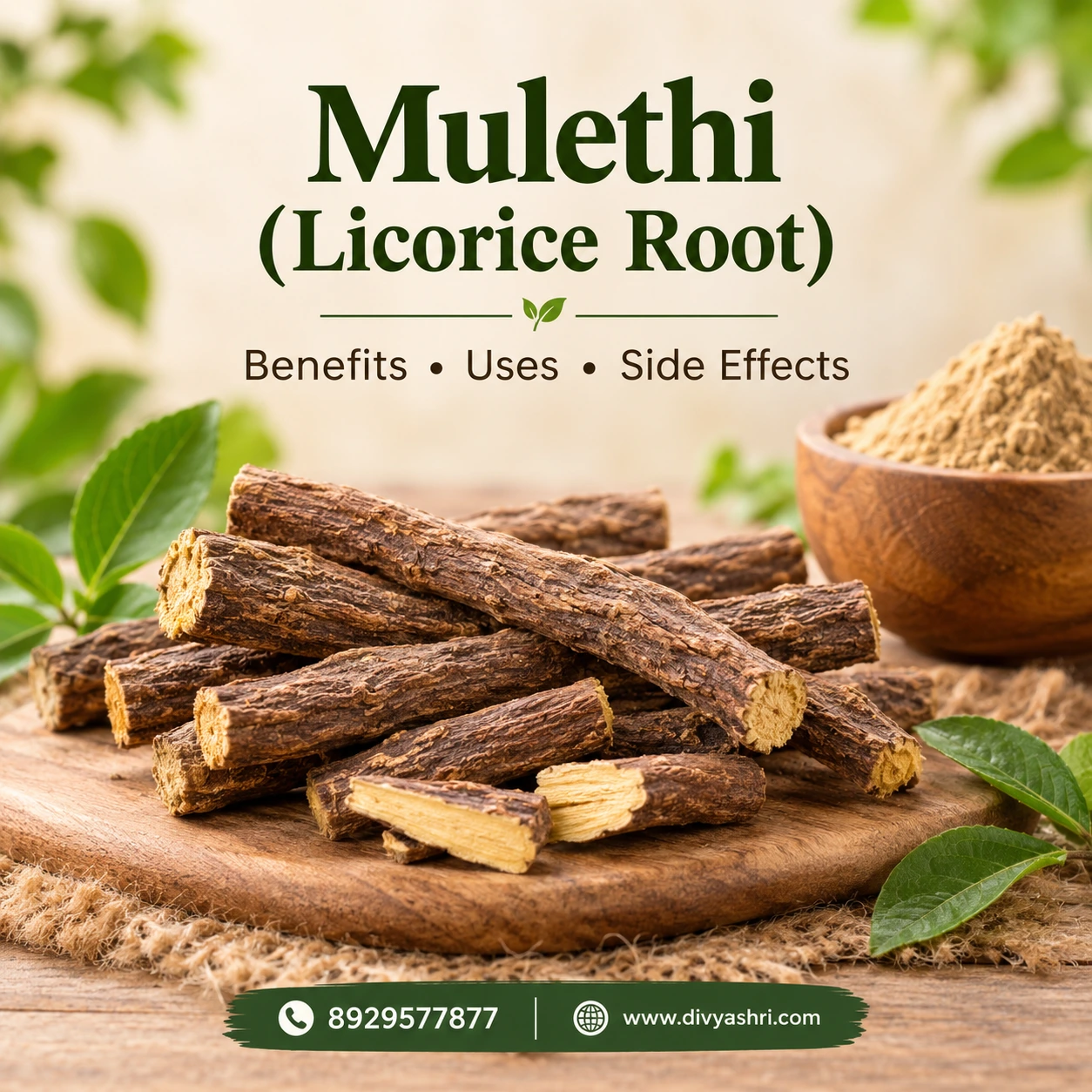
Mulethi (मुलेठी) जिसे English में Licorice Root कहा जाता है, एक पारंपरिक जड़ी-बूटी है जिसका उपयोग लंबे समय से विभिन्न पारंपरिक चिकित्सा पद्धतियों में किया जाता रहा है। इसका botanical name Glycyrrhiza glabra है। भारत में इसे Yashtimadhu, Mulhatti और Sweet Root जैसे नामों से भी जाना जाता है।
Mulethi का स्वाद प्राकृतिक रूप से मीठा होता है और इसकी जड़ में glycyrrhizin सहित कई bioactive compounds पाए जाते हैं। पारंपरिक रूप से मुलेठी का इस्तेमाल गले, खांसी, पाचन और oral health से जुड़े कई घरेलू उपायों में किया जाता रहा है। हालांकि, हर health benefit के लिए मजबूत clinical evidence उपलब्ध नहीं है, इसलिए इसे किसी बीमारी का इलाज मानना सही नहीं होगा।
Mulethi क्या है?
Mulethi एक जड़ी-बूटी की जड़ है जो Glycyrrhiza species से प्राप्त होती है। इसका सबसे commonly studied species Glycyrrhiza glabra है।
मुलेठी की जड़ में glycyrrhizin प्रमुख compounds में से एक है। इसके अलावा इसमें flavonoids और अन्य bioactive compounds भी पाए जाते हैं। इन्हीं compounds के कारण वैज्ञानिकों ने इसके antioxidant, anti-inflammatory और antimicrobial properties का अध्ययन किया है।
आयुर्वेदिक परंपरा में Mulethi को Yashtimadhu कहा जाता है और इसे विशेष रूप से गले तथा respiratory comfort से जुड़े घरेलू उपयोगों में जाना जाता है।
Mulethi Benefits: मुलेठी के 7 संभावित फायदे
1. गले की खराश और throat comfort में मदद
मुलेठी का सबसे लोकप्रिय traditional use गले से जुड़ा हुआ है। Mulethi को अक्सर चाय, काढ़े या अन्य herbal preparations में इस्तेमाल किया जाता है।
कुछ clinical research में licorice gargle या lozenges को surgery के बाद होने वाले sore throat की severity कम करने में संभावित रूप से उपयोगी पाया गया है। हालांकि सामान्य sore throat के लिए licorice को निश्चित इलाज मानने के लिए पर्याप्त evidence नहीं है।
Mulethi for throat इसलिए traditional home remedies में काफी लोकप्रिय है।
2. खांसी और respiratory comfort के लिए पारंपरिक उपयोग
Mulethi का इस्तेमाल पारंपरिक चिकित्सा में cough और respiratory complaints के लिए लंबे समय से किया जाता रहा है। इसकी soothing properties के कारण मुलेठी को कई herbal preparations में शामिल किया जाता है।
हालांकि, खांसी के कारण अलग-अलग हो सकते हैं। लगातार खांसी, सांस लेने में परेशानी, सीने में दर्द या खून आने जैसी स्थिति में केवल Mulethi पर निर्भर नहीं रहना चाहिए।
3. पाचन संबंधी आराम में संभावित भूमिका
Licorice Root Benefits में digestive health सबसे अधिक चर्चित विषयों में से एक है। कुछ licorice preparations, खासकर DGL (Deglycyrrhizinated Licorice), को digestive discomfort और heartburn जैसे symptoms के लिए study किया गया है।
लेकिन NCCIH के अनुसार licorice alone से digestive symptoms में कितना फायदा होता है, यह अभी स्पष्ट नहीं है। इसलिए इसे acidity, ulcer या किसी digestive disease का proven treatment नहीं माना जाना चाहिए।
4. Oral health के लिए संभावित उपयोग
Mulethi पर oral health को लेकर भी research हुई है। Scientific reviews में licorice के compounds को oral bacteria, plaque, recurrent mouth ulcers और bad breath जैसे विषयों के संदर्भ में study किया गया है।
कुछ प्रारंभिक evidence यह भी बताता है कि licorice-containing mouthwash bad breath से जुड़े bacteria को कम करने में मदद कर सकता है। लेकिन इसे regular brushing, flossing या dental treatment का replacement नहीं समझना चाहिए।
5. Antioxidant और anti-inflammatory properties
Mulethi में glycyrrhizin, glabridin और अन्य bioactive compounds पाए जाते हैं। Laboratory और review-based research में इन compounds से antioxidant और anti-inflammatory activities जुड़ी हुई हैं।
इसका मतलब यह नहीं है कि Mulethi हर inflammatory disease को ठीक कर सकती है। Human clinical evidence अभी सीमित है और इसके health effects product type, dose और व्यक्ति की health condition के अनुसार अलग हो सकते हैं।
6. Skin care में संभावित उपयोग
Licorice extract का उपयोग कुछ topical skin-care products में किया जाता है। प्रारंभिक studies में licorice-containing topical preparations को eczema symptoms और wound/burn healing जैसे areas में investigate किया गया है।
इसलिए Mulethi for skin का उपयोग कुछ cosmetic और topical herbal formulations में देखने को मिलता है। फिर भी किसी skin condition के लिए इसे medical treatment का replacement नहीं माना जाना चाहिए।
7. Mouth ulcers में संभावित राहत
Mulethi का एक interesting research area recurrent canker sores यानी बार-बार होने वाले mouth ulcers हैं।
NCCIH के अनुसार licorice mouth rinse या gargle कुछ लोगों में recurrent canker sores के size और pain को कम करने में मदद कर सकता है। हालांकि इस area में भी research सीमित है और बेहतर-quality studies की आवश्यकता है।
इसलिए mouth ulcers के लिए Mulethi को एक संभावित supportive option के रूप में देखा जा सकता है, लेकिन बार-बार ulcers होने पर underlying cause के लिए doctor या dentist से सलाह लेना जरूरी है।
Mulethi Uses: मुलेठी का उपयोग कैसे किया जाता है?
Mulethi का उपयोग अलग-अलग forms में किया जाता है, जैसे:
- Mulethi root
- Mulethi powder
- Licorice tea
- Herbal preparations
- Lozenges
- Mouth rinses
- Topical creams या gels
- Deglycyrrhizinated licorice यानी DGL
इसकी मात्रा और form बहुत महत्वपूर्ण हैं क्योंकि सभी licorice products में glycyrrhizin की मात्रा समान नहीं होती।
Mulethi Side Effects: मुलेठी के नुकसान क्या हैं?
Mulethi सामान्य food-level amounts में कई लोगों के लिए सुरक्षित हो सकती है, लेकिन high amounts या लंबे समय तक licorice root का सेवन side effects पैदा कर सकता है।
इसका मुख्य कारण glycyrrhizin है। अधिक glycyrrhizin शरीर में sodium retention और potassium loss से जुड़ा हो सकता है, जिससे blood pressure बढ़ सकता है और fluid retention हो सकता है।
संभावित Mulethi Side Effects में शामिल हैं:
1. Blood pressure बढ़ना
अधिक या लंबे समय तक licorice का सेवन कुछ लोगों में blood pressure बढ़ा सकता है। खासकर hypertension वाले लोगों को सावधानी रखनी चाहिए।
2. Potassium कम होना
Glycyrrhizin potassium levels को कम कर सकता है। गंभीर मामलों में low potassium muscle weakness और abnormal heart rhythm जैसी समस्याओं से जुड़ सकता है।
3. शरीर में पानी रुकना
Excessive licorice consumption से sodium और fluid retention हो सकता है, जिसके कारण swelling या edema हो सकता है।
4. Heart-related complications
बहुत अधिक या लंबे समय तक सेवन करने पर licorice गंभीर cardiovascular complications से जुड़ सकता है। NCCIH irregular heartbeat और कुछ मामलों में cardiac arrest जैसे गंभीर adverse effects की चेतावनी देता है।
5. सिरदर्द और कमजोरी
Excess licorice intake से blood pressure और electrolyte balance में बदलाव होने के कारण headache, fatigue और weakness जैसी समस्याएं हो सकती हैं।
किन लोगों को Mulethi से सावधान रहना चाहिए?
निम्न लोगों को oral Mulethi या licorice supplements लेने से पहले healthcare professional से सलाह लेनी चाहिए:
- High blood pressure वाले लोग
- Heart disease वाले लोग
- Kidney disease वाले लोग
- जिनका potassium पहले से कम रहता है
- जो diuretics या blood-pressure medicines लेते हैं
- जो corticosteroid medicines लेते हैं
- Pregnant women
- Breastfeeding women
NCCIH के अनुसार licorice corticosteroids के साथ interact कर सकती है और pregnancy में high oral intake unsafe हो सकता है।
Mulethi और DGL में क्या अंतर है?
DGL यानी Deglycyrrhizinated Licorice ऐसा licorice preparation है जिसमें glycyrrhizin को काफी हद तक remove किया जाता है।
यह distinction महत्वपूर्ण है क्योंकि glycyrrhizin ही licorice के कई adverse effects, जैसे blood pressure बढ़ना और potassium कम होना, से जुड़ा प्रमुख component है।
इसका मतलब यह नहीं है कि DGL हर व्यक्ति के लिए automatically safe है। किसी supplement को लेने से पहले उसके ingredients, dosage और अपनी health condition को ध्यान में रखना चाहिए।
क्या Mulethi रोज खा सकते हैं?
यह product के form, glycyrrhizin content, मात्रा और व्यक्ति की health condition पर निर्भर करता है।
Food ingredient के रूप में licorice सामान्यतः सुरक्षित माना जाता है, लेकिन concentrated licorice supplements का लंबे समय तक या अधिक मात्रा में सेवन अलग स्थिति है।
विशेष रूप से high blood pressure, heart या kidney problems वाले लोगों को बिना professional advice के concentrated Mulethi supplements नहीं लेने चाहिए।
Mulethi का सेवन करने से पहले जरूरी सावधानियां
Mulethi को केवल इसलिए अधिक मात्रा में नहीं लेना चाहिए क्योंकि यह एक natural herb है। Herbal products में active compounds होते हैं और वे medicines के साथ interaction कर सकते हैं।
अगर आप पहले से कोई medicine लेते हैं, तो Mulethi या Licorice Root supplement शुरू करने से पहले अपने doctor या qualified healthcare professional से बात करें।
अगर Mulethi लेने के बाद unusual swelling, severe weakness, palpitations या blood pressure बढ़ने जैसे symptoms दिखाई दें, तो इसका सेवन रोककर medical advice लेना उचित है।
Frequently Asked Questions About Mulethi
क्या Mulethi और Licorice Root एक ही हैं?
हाँ। Mulethi को English में Licorice Root या Liquorice Root कहा जाता है। इसका commonly used botanical species Glycyrrhiza glabra है।
Mulethi के मुख्य फायदे क्या हैं?
Traditional use में Mulethi का इस्तेमाल throat comfort, cough-related preparations, digestive support और oral health के लिए किया जाता रहा है। Scientific research में इसके कुछ संभावित benefits भी study किए गए हैं, लेकिन हर claimed benefit के लिए पर्याप्त clinical evidence उपलब्ध नहीं है।
क्या Mulethi खांसी के लिए उपयोगी है?
Mulethi का traditional use cough और respiratory complaints में होता रहा है। लेकिन लगातार या गंभीर खांसी के लिए केवल Mulethi पर निर्भर नहीं रहना चाहिए।
क्या Mulethi acidity में मदद करती है?
Licorice और DGL को digestive symptoms और heartburn के संदर्भ में study किया गया है, लेकिन licorice alone के digestive benefits को लेकर evidence अभी स्पष्ट नहीं है।
क्या Mulethi के side effects हो सकते हैं?
हाँ। अधिक मात्रा या लंबे समय तक सेवन से blood pressure बढ़ना, potassium कम होना, fluid retention और गंभीर cardiovascular problems का risk हो सकता है।
क्या high BP वाले लोग Mulethi ले सकते हैं?
High blood pressure वाले लोगों को Mulethi विशेष सावधानी से इस्तेमाल करनी चाहिए क्योंकि glycyrrhizin blood pressure बढ़ा सकता है। Supplement लेने से पहले healthcare professional से सलाह लेना बेहतर है।
Conclusion
Mulethi (Licorice Root) एक लोकप्रिय traditional herb है जिसका उपयोग सदियों से किया जाता रहा है। Mulethi Benefits में throat comfort, traditional cough support, digestive support, oral health और topical skin applications जैसे कई संभावित uses शामिल हैं।