
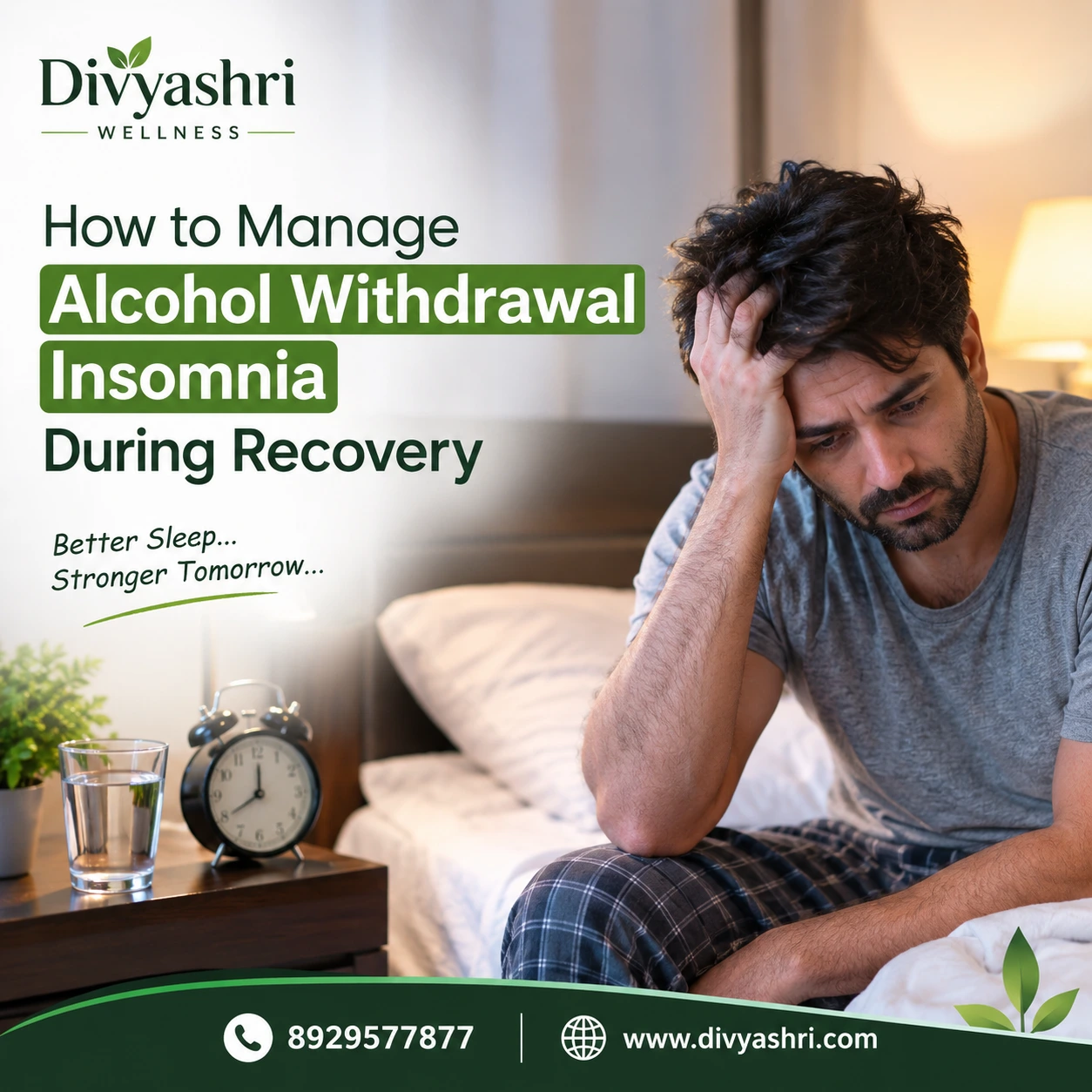
One of the most frustrating and exhausting parts of quitting alcohol is alcohol withdrawal insomnia — the inability to fall asleep or stay asleep once drinking stops. If you or someone you love is going through recovery and lying awake night after night, you are not alone. Sleep problems are one of the most commonly reported alcohol withdrawal symptoms, and for many people, they last far longer than the other physical symptoms.
In this guide, we’ll explain why insomnia after quitting alcohol happens, how long it typically lasts, and — most importantly — practical, medically informed ways to manage it, including lifestyle changes, doctor-guided treatment, and Ayurvedic support options.
Why Does Alcohol Withdrawal Cause Insomnia?
Alcohol is a central nervous system depressant. Over time, the brain adapts to its presence by increasing excitatory (stimulating) chemical activity to balance things out. When you suddenly stop drinking, this compensatory stimulation is left unopposed — leaving the brain and nervous system in an “overexcited” state. This is the core reason behind alcohol withdrawal sleep problems.
Common contributing factors include:
- GABA and glutamate imbalance – Alcohol boosts calming GABA activity; withdrawal causes a rebound spike in stimulating glutamate.
- Disrupted REM sleep cycles – Long-term drinking suppresses REM sleep; withdrawal often triggers vivid dreams and REM rebound.
- Anxiety and hyperarousal – The body’s stress response (cortisol, adrenaline) stays elevated during early recovery.
- Physical discomfort – Sweating, tremors, rapid heartbeat, and nausea can make falling asleep difficult.
How Long Does Insomnia After Quitting Alcohol Last?
Recovery Stage | Typical Timeline | Sleep Symptoms |
Acute withdrawal | Day 1–7 | Severe insomnia, restlessness, night sweats |
Early recovery | Week 2–4 | Improving but fragmented sleep |
Post-acute withdrawal (PAWS) | 1–6 months (sometimes longer) | Occasional insomnia, vivid dreams, low sleep quality |
For some people, especially long-term or heavy drinkers, mild sleep disturbance can persist for several months as part of Post-Acute Withdrawal Syndrome (PAWS).
⚠️ Important Safety Note
Alcohol withdrawal can be medically serious in some cases, including risks of seizures or delirium tremens (DTs), especially for heavy or long-term drinkers. If you experience confusion, hallucinations, high fever, seizures, or severe tremors, seek emergency medical care immediately. This blog is for informational purposes only and does not replace professional medical or psychiatric advice — always consult a qualified doctor or de-addiction specialist before starting withdrawal.
10 Ways to Manage Alcohol Withdrawal Insomnia
1. Stick to a Fixed Sleep Schedule
Go to bed and wake up at the same time daily, even on weekends. This helps reset your circadian rhythm, which alcohol use disrupts.
2. Avoid Caffeine and Nicotine in the Evening
Both are stimulants that worsen the hyperarousal already caused by alcohol withdrawal.
3. Practice Relaxation Techniques
Deep breathing, progressive muscle relaxation, and guided meditation can calm an overstimulated nervous system before bed.
4. Limit Screen Time Before Bed
Blue light from phones and laptops delays melatonin release. Switch off screens at least 45–60 minutes before sleep.
5. Exercise During the Day (Not at Night)
Light to moderate exercise like walking or yoga improves sleep quality, but avoid intense workouts close to bedtime.
6. Try Herbal and Calming Teas
Chamomile, valerian root, and ashwagandha-based teas are commonly used to promote natural relaxation.
7. Create a Cool, Dark Sleep Environment
Since night sweats are common in withdrawal, keep the room cool, dark, and well-ventilated.
8. Eat Sleep-Friendly Foods
Foods rich in magnesium (nuts, bananas, leafy greens) and tryptophan (milk, seeds) may support natural sleep hormone production.
9. Consider Medical Support for Severe Symptoms
In moderate-to-severe withdrawal, doctors may prescribe short-term medications (such as benzodiazepines under strict supervision) to manage insomnia and prevent complications. This should only be done under medical guidance — never self-medicate.
10. Explore Ayurvedic Support Alongside Medical Care
Many people in India combine modern de-addiction treatment with Ayurvedic formulations that are traditionally used to calm the nervous system, reduce cravings, and support restful sleep during recovery. One such Ayurvedic formula is Divyashri Nasha Mukti Plus, which is marketed as a natural support supplement for individuals working on quitting alcohol. If you’re considering it, it’s best used as a complementary support alongside — not a replacement for — proper medical de-addiction treatment, and only after consulting a qualified Ayurvedic practitioner or doctor.
When Should You See a Doctor?
Consult a de-addiction specialist or physician if:
- Insomnia lasts more than 2–3 weeks without improvement
- You experience tremors, hallucinations, or seizures
- You feel severe anxiety, depression, or suicidal thoughts
- You have a history of heavy, long-term alcohol use
Medically supervised detox is strongly recommended for heavy drinkers, as it significantly reduces the risk of complications.
Frequently Asked Questions (FAQ)
Q1. How long does alcohol withdrawal insomnia last? Acute insomnia usually improves within 1–2 weeks, though mild sleep disturbances can continue for a few months as part of PAWS.
Q2. Is it normal to not sleep at all during alcohol withdrawal? Yes, complete or near-complete sleeplessness in the first few days is common, especially in heavy drinkers, but should be monitored by a doctor.
Q3. Can Ayurvedic remedies help with alcohol withdrawal insomnia? Some people use Ayurvedic formulations like Divyashri Nasha Mukti Plus alongside medical treatment for calming support, but they should not replace professional de-addiction care.
Q4. What is the fastest way to fall asleep during alcohol detox? A consistent sleep routine, relaxation techniques, and avoiding stimulants help — but for severe insomnia, medical evaluation is recommended.
Conclusion
Alcohol withdrawal insomnia is a real and often exhausting part of recovery, but it is temporary and manageable with the right approach. Combining good sleep hygiene, relaxation techniques, medical supervision when needed, and supportive options like Ayurvedic formulations can help you get through this phase safely and comfortably. Recovery is a journey — better sleep is one of the first signs your body is healing.