Opium addiction, commonly known as afeem addiction, is a serious health condition that can affect a person’s physical health, mental well-being, relationships, and daily life. Many people who struggle with opium dependence want to quit but find it difficult because of cravings, withdrawal symptoms, and fear of discomfort.
If you or someone you love is struggling with afeem addiction, understanding the right treatment options is the first step toward recovery.
How to quit opium addiction safely? The most effective approach involves professional medical guidance, appropriate treatment, emotional support, and long-term recovery planning. With the right help, overcoming opium dependence is possible.
What Is Opium Addiction?
Opium, also known as afeem, is a naturally derived substance obtained from the opium poppy plant. It contains opioid compounds that affect the brain and nervous system.
Opium can produce feelings of relaxation and temporary relief from discomfort. However, repeated use may lead to tolerance, physical dependence, and addiction.
When a person develops opium dependence, they may experience strong cravings and withdrawal symptoms when they reduce or stop using it.
Opium addiction is a treatable health condition. It should not be considered a lack of willpower or a personal failure.
According to the World Health Organization (WHO), opioid dependence can be treated through evidence-based medical treatment and psychosocial support.
What Are the Common Symptoms of Afeem Addiction?
Recognizing the symptoms of afeem addiction can help individuals and families seek timely treatment.
Physical Symptoms
Common physical symptoms may include:
- Persistent tiredness and low energy
- Constipation and digestive problems
- Changes in appetite
- Sleep disturbances
- Increased tolerance to opium
- Physical discomfort when reducing use
- Sweating and restlessness
Behavioural and Emotional Symptoms
A person experiencing opium addiction may also:
- Feel strong cravings for opium
- Spend considerable time obtaining or using the substance
- Struggle to reduce or stop consumption
- Neglect family, work, or personal responsibilities
- Experience anxiety or mood changes
- Continue using opium despite harmful consequences
These symptoms can vary from person to person. A healthcare professional can assess the severity of dependence and recommend an appropriate treatment plan.
What Causes Opium Addiction?
Opium addiction can develop through several physical, psychological, and social factors.
1. Repeated Opium Use
Repeated exposure to opioids can change how the brain responds to the substance. Over time, a person may require more of the substance to experience similar effects.
2. Physical Dependence
When the body becomes accustomed to opium, reducing or stopping its use may trigger withdrawal symptoms.
These symptoms can make quitting difficult without appropriate support.
3. Stress and Emotional Difficulties
Some individuals use opium to cope with stress, anxiety, emotional distress, or difficult life experiences.
However, continued use can worsen existing problems and create additional health challenges.
4. Social and Environmental Factors
Social influences, availability of substances, and repeated exposure to environments associated with drug use may contribute to continued consumption.
Understanding these factors can help healthcare professionals develop an individualized recovery plan.
How to Quit Opium Addiction Safely?
If you are searching for how to quit opium addiction, it is important to understand that recovery is not simply about stopping consumption.
A safe and effective approach involves medical assessment, withdrawal management, and long-term support.
1. Seek Professional Medical Guidance
The first step is to consult a qualified psychiatrist, addiction medicine specialist, or healthcare professional experienced in treating opioid dependence.
The doctor may assess:
- How long the person has been using opium
- The amount and frequency of consumption
- Previous attempts to quit
- Existing medical conditions
- Mental health concerns
- Other substances or medications being used
Based on this assessment, the healthcare professional can recommend an appropriate treatment plan.
2. Understand Opium Withdrawal Symptoms
When a person with opioid dependence stops or significantly reduces consumption, withdrawal symptoms may occur.
Common opium withdrawal symptoms include:
- Muscle and bone pain
- Restlessness and anxiety
- Sweating and chills
- Insomnia
- Nausea and vomiting
- Diarrhea
- Abdominal discomfort
- Strong cravings
- Irritability and low mood
The severity and duration of withdrawal depend on the individual’s pattern of use, overall health, and the type of opioid involved.
Withdrawal can be uncomfortable and may require medical management.
The National Narcotics Coordination Portal explains that withdrawal symptoms can vary depending on the substance and that detoxification alone is not a complete addiction treatment.
3. Explore Evidence-Based Treatment Options
Professional treatment can help individuals manage cravings, withdrawal symptoms, and the risk of relapse.
Depending on the person’s condition, a healthcare professional may recommend:
Medication-assisted treatment: Medicines such as buprenorphine or methadone may be used under medical supervision to manage opioid dependence. Naltrexone may be appropriate for selected individuals after a suitable opioid-free period.
Medical withdrawal management: Healthcare professionals may provide treatment to manage withdrawal symptoms and monitor the person’s health.
Counselling and behavioural therapy: Psychological support can help individuals identify triggers, develop coping strategies, and improve their ability to maintain recovery.
Long-term recovery support: Continued treatment and follow-up can help reduce the risk of relapse.
The appropriate treatment depends on the individual’s medical history, severity of dependence, and personal needs.
4. Build a Healthy Daily Routine
A structured lifestyle can support recovery alongside professional treatment.
Helpful habits include:
- Maintaining regular sleep timings
- Eating balanced and nutritious meals
- Staying hydrated
- Engaging in light physical activity as advised by a healthcare professional
- Practicing relaxation techniques
- Spending time with supportive family members
- Avoiding situations associated with substance use
These habits can support general well-being, but they are not a replacement for addiction treatment.
5. Identify Triggers and Manage Cravings
Cravings may occur during recovery, especially when a person encounters familiar situations or emotional stress.
Identifying personal triggers can help individuals prepare for difficult moments.
Useful strategies include:
- Talking to a trusted family member
- Seeking support from a counsellor
- Practicing breathing exercises
- Developing alternative activities
- Avoiding environments associated with substance use
- Following the prescribed treatment plan
Cravings do not mean that recovery has failed. They are a reason to seek additional support when needed.
How Long Does It Take to Recover From Opium Addiction?
There is no single recovery timeline for opium addiction.
Some people experience withdrawal symptoms for several days, while others may have longer-lasting sleep disturbances, mood changes, or cravings.
Recovery may involve several stages:
Recovery Stage | What to Expect |
Medical Assessment | Evaluation of dependence and health |
Withdrawal Management | Medical support for withdrawal symptoms |
Early Recovery | Building healthy routines and managing cravings |
Continued Treatment | Counselling, medical follow-up, and relapse prevention |
Long-Term Recovery | Maintaining progress and ongoing support |
Recovery is a gradual process. The duration of treatment depends on individual needs and the recommended care plan.
Can Opium Addiction Be Treated With Ayurvedic Products?
Many individuals explore traditional wellness approaches while looking for support during addiction recovery.
Ayurvedic wellness products may be considered as part of a broader wellness routine, but it is important to understand their limitations.
There is currently insufficient high-quality clinical evidence to establish that Ayurvedic products alone can safely and effectively treat opium dependence or opioid withdrawal.
People should not replace prescribed addiction treatment with herbal products or discontinue medical treatment without consulting their healthcare professional.
An informed approach combines appropriate medical care with healthy lifestyle habits and supportive wellness practices.
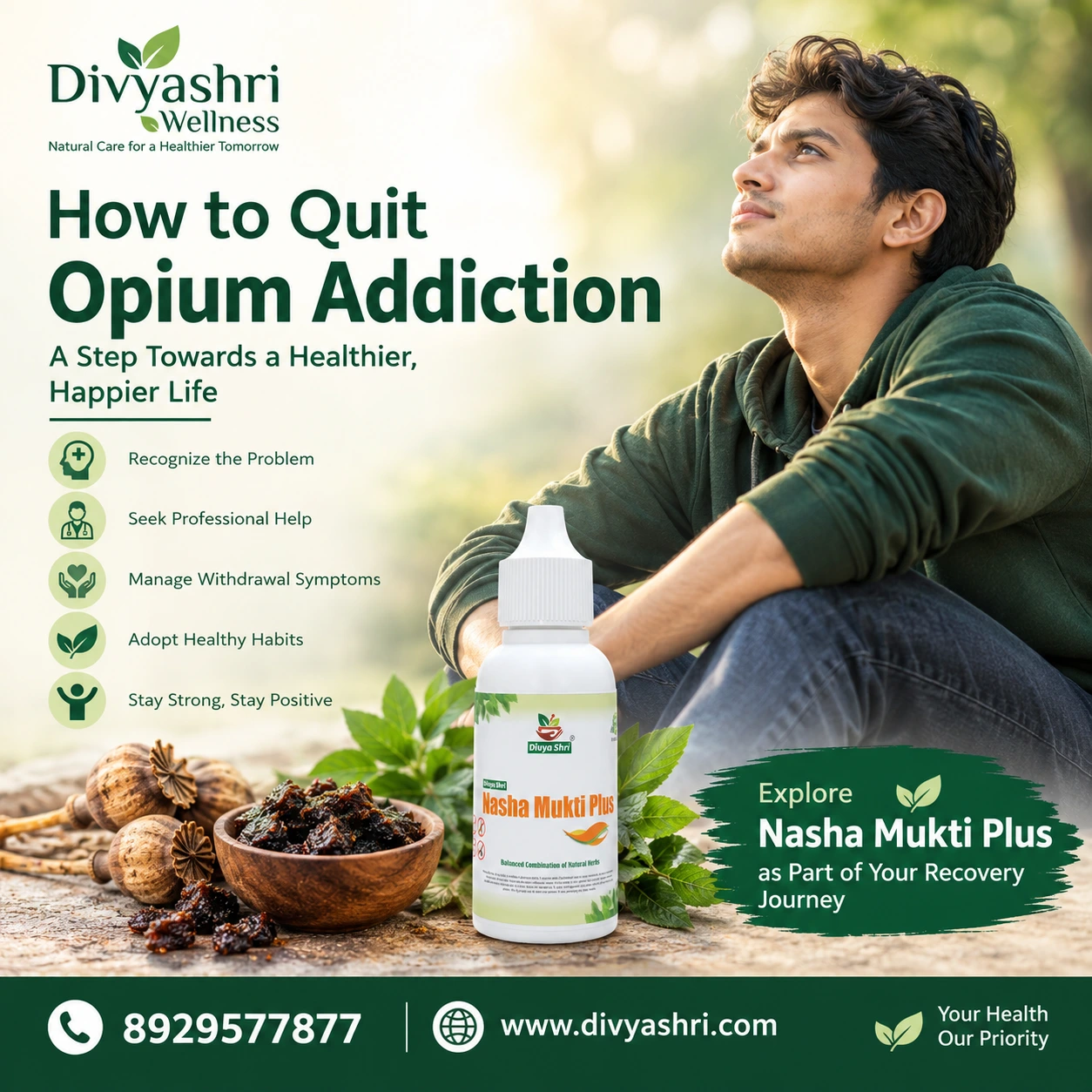
Nasha Mukti Plus by Divyashri Wellness
At Divyashri Wellness, we understand the importance of supporting individuals and families who are exploring wellness options during challenging times.
Our product, Nasha Mukti Plus, is a herbal wellness product offered by Divyashri Wellness.
Important Information About Nasha Mukti Plus
Nasha Mukti Plus should not be presented as a clinically proven treatment for opium addiction unless appropriate clinical evidence is available.
It should not be used as a substitute for:
- Medical assessment
- Opioid withdrawal management
- Prescribed addiction treatment
- Professional counselling
- Emergency medical care
If you or a family member is struggling with addiction, consult a qualified healthcare professional before using any herbal product.
Explore Nasha Mukti. Plus: Visit Divyashri Wellness
Divyashri Wellness believes that informed decisions, responsible wellness practices, and professional guidance are important parts of a healthier lifestyle.
How Can Family Members Help Someone Quit Afeem Addiction?
Family support can play an important role in addiction recovery.
If someone in your family is struggling with opium addiction, consider the following steps:
Avoid Blaming or Shaming
Addiction is a complex health condition. Blaming the person may make it harder for them to seek help.
Encourage Professional Treatment
Help the individual connect with a qualified healthcare professional or addiction treatment service.
Provide Emotional Support
Listen without judgement and encourage the person to discuss their concerns.
Recognise Relapse as a Signal for Support
A return to substance use does not mean that recovery is impossible. It may indicate that the treatment plan needs to be reassessed.
The National Narcotics Coordination Portal emphasises that addiction is treatable and that relapse should prompt renewed or modified treatment and support.
Frequently Asked Questions (FAQs)
1. How to quit opium addiction permanently?
Quitting opium addiction involves professional medical treatment, withdrawal management, counselling, and long-term recovery support. There is no guaranteed permanent cure, but sustained recovery is possible.
2. What are the best treatments for afeem addiction?
Treatment may include medically supervised withdrawal management, medications for opioid use disorder, counselling, and ongoing recovery support. The right treatment depends on the person’s individual condition.
3. Can opium addiction be treated at home?
Some individuals may receive outpatient treatment, but the suitability of home-based care depends on the severity of dependence and overall health. A healthcare professional should assess the person before treatment begins.
4. What are the common opium withdrawal symptoms?
Common symptoms include muscle pain, sweating, anxiety, restlessness, insomnia, nausea, vomiting, diarrhea, and cravings.
5. Does Nasha Mukti Plus cure opium addiction?
Nasha Mukti Plus is a herbal wellness product by Divyashri Wellness. It should not be considered a clinically proven cure for opium addiction or a replacement for evidence-based medical treatment.
6. Is opium addiction a lifelong condition?
Opium addiction can be a chronic condition, but recovery is possible. Many people achieve sustained recovery with appropriate treatment, continued support, and healthy coping strategies.
Conclusion
Understanding how to quit opium addiction is an important step toward a healthier and more stable life.
Opium dependence can affect physical health, emotional well-being, and family relationships. However, with appropriate medical treatment, counselling, and continued support, individuals can work toward recovery.
If you or someone you know is struggling with afeem addiction, do not hesitate to seek professional help.
At Divyashri Wellness, we encourage informed wellness decisions and responsible approaches to health.
For more information about our wellness products, including Nasha Mukti Plus, visit our official website.
For more information, visit our website: www.divyashri.com