
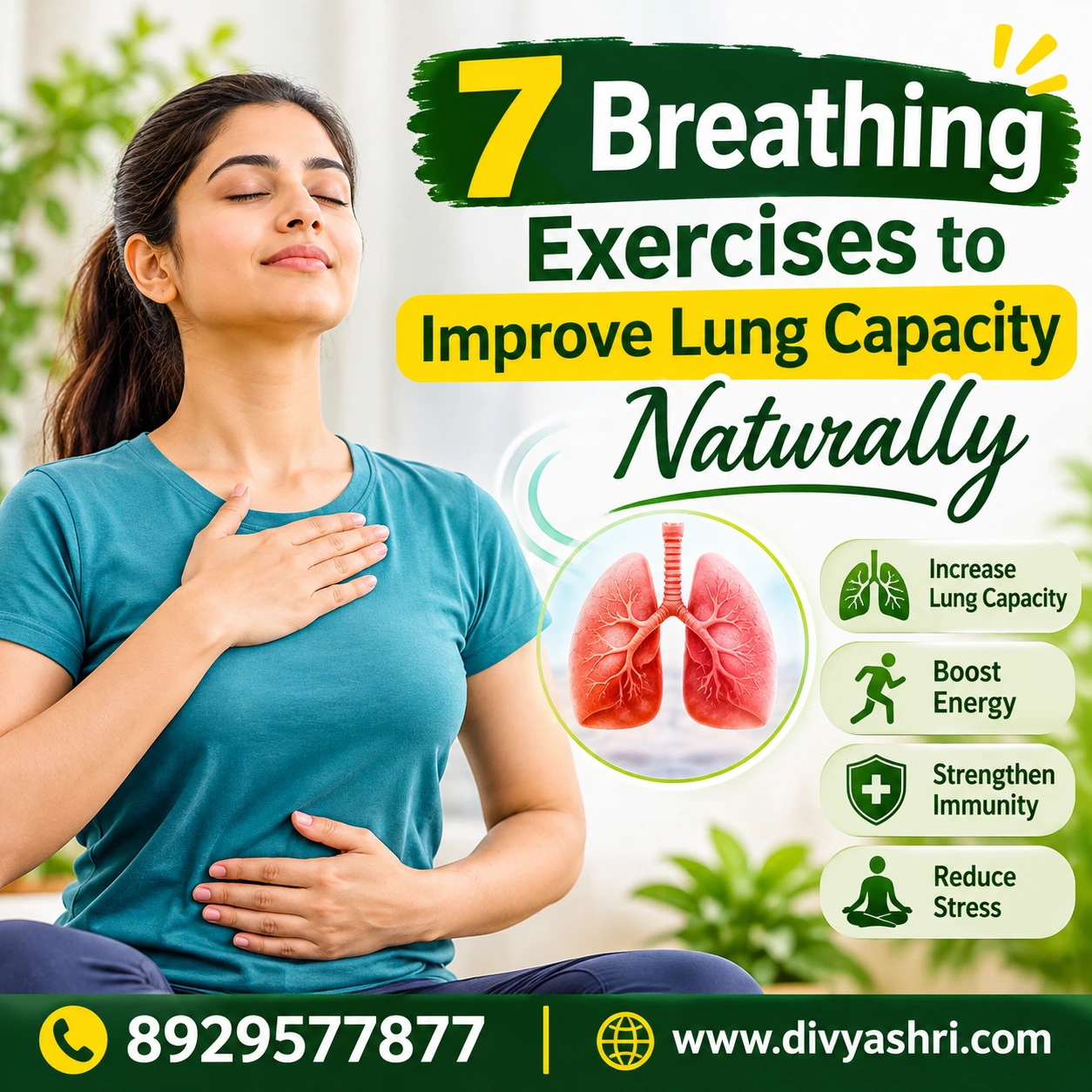
Breathing is one of the most important functions of the human body. Our lungs supply oxygen to the bloodstream and help remove carbon dioxide. However, factors such as smoking, air pollution, physical inactivity, ageing and certain respiratory conditions can affect breathing efficiency.
Practising breathing exercises to increase lung capacity can help improve breathing control, strengthen the breathing muscles and support better respiratory function. These exercises are simple, can be practised at home and generally require no special equipment.
Whether you want to improve your breathing stamina, develop better breath control or support overall lung health, incorporating simple lung exercises into your daily routine may be beneficial.
What Is Lung Capacity and Why Is It Important?
Lung capacity refers to the amount of air your lungs can hold and move during breathing. It plays an important role in delivering oxygen to the body and supporting physical activities.
Healthy breathing depends on several factors, including:
Strong and properly functioning respiratory muscles.
Healthy airways that allow air to move freely.
Good breathing patterns and control.
Regular physical activity.
Avoiding smoking and exposure to harmful pollutants.
Top 7 Breathing Exercises to Naturally Increase Lung Capacity
Here are seven simple breathing exercises that may help improve breathing control, support respiratory muscles and promote better lung health.
1. Diaphragmatic Breathing (Belly Breathing)
Diaphragmatic breathing, also known as belly breathing, is one of the most useful breathing techniques for improving breathing efficiency. It focuses on using the diaphragm, the primary muscle responsible for breathing.
This technique encourages deeper, controlled breathing and reduces unnecessary movement of the upper chest and shoulders.
How to Perform:
Sit comfortably or lie down on your back.
Place one hand on your chest and the other on your stomach.
Slowly breathe in through your nose.
Allow your stomach to rise while keeping your chest relatively still.
Slowly breathe out through your mouth.
Repeat for 5–10 minutes without forcing your breath.
Benefits of Diaphragmatic Breathing:
Improves diaphragm coordination.
Encourages controlled breathing.
Helps reduce breathing-related muscle tension.
May help manage feelings of breathlessness.
Promotes relaxation and stress management.
2. Pursed-Lip Breathing
Pursed-lip breathing is a simple technique that helps slow down your breathing and makes it easier to control the movement of air.
It is particularly useful for people who experience breathlessness during physical activities or have certain chronic respiratory conditions, such as COPD.
How to Perform:
Sit in a comfortable position.
Relax your shoulders and neck.
Breathe in slowly through your nose for approximately two seconds.
Purse your lips as if you are going to whistle.
Slowly breathe out through your lips for around four seconds.
Repeat until your breathing feels comfortable.
Benefits of Pursed-Lip Breathing:
Helps control breathing speed.
Supports longer and slower exhalation.
May reduce shortness of breath.
Helps maintain airflow during breathing.
Can be useful during walking and other physical activities.
3. Box Breathing (Square Breathing)
It involves four equal breathing stages. This exercise can help develop awareness of breathing patterns and promote a calm state of mind.
How to Perform:
Sit comfortably with your back straight.
Slowly inhale through your nose for four seconds.
Hold your breath gently for four seconds.
Exhale slowly for four seconds.
Pause for four seconds before inhaling again.
Repeat for 3–5 cycles if comfortable.
Benefits of Box Breathing:
Encourages controlled breathing.
Supports relaxation.
May help manage everyday stress.
Improves awareness of breathing patterns.
Helps develop a regular breathing rhythm.
4. Alternate Nostril Breathing (Nadi Shodhana Pranayama)
Alternate nostril breathing, traditionally known as Nadi Shodhana Pranayama, is a popular yoga breathing technique.
It involves breathing through one nostril at a time while gently closing the other nostril. This practice encourages slow, mindful breathing and can be included in a daily relaxation routine.
How to Perform:
Sit comfortably with your spine straight.
Gently close your right nostril using your thumb.
Breathe in slowly through your left nostril.
Close your left nostril and release your right nostril.
Breathe out slowly through your right nostril.
Now inhale through the right nostril.
Switch sides and exhale through the left nostril.
Continue for 3–5 minutes at a comfortable pace.
Benefits of Alternate Nostril Breathing:
Encourages slow and controlled breathing.
Promotes relaxation.
Helps develop breathing awareness.
May support stress management.
Can become part of a regular yoga routine.
5. Deep Breathing Exercise
Deep breathing is one of the simplest exercises for developing better breathing habits. It involves taking slow, comfortable breaths rather than shallow and rapid breaths.
Practising controlled deep breathing may help improve respiratory coordination and encourage relaxed breathing.
How to Perform:
Sit or stand in a comfortable position.
Keep your shoulders relaxed.
Slowly inhale through your nose.
Allow your lower ribs and abdomen to expand naturally.
Exhale gently through your mouth.
Repeat for 5 minutes without taking unusually large or forced breaths.
Benefits of Deep Breathing:
Encourages controlled breathing.
Helps relax respiratory muscles.
Supports better breathing awareness.
May help reduce stress and tension.
Promotes a comfortable breathing rhythm.
6. Humming Bee Breathing (Bhramari Pranayama)
Bhramari Pranayama, also called humming bee breathing, is a traditional yoga breathing practice in which you produce a gentle humming sound while breathing out.
The humming sound creates vibrations around the face and throat and can make the practice relaxing.
How to Perform:
Sit comfortably in a quiet place.
Close your eyes gently.
Take a slow breath in through your nose.
While breathing out, make a soft humming sound like a bee.
Keep your face and jaw relaxed.
Repeat for 5–7 comfortable rounds.
Benefits of Bhramari Pranayama:
Encourages slow breathing.
Supports relaxation.
May help reduce everyday stress.
Promotes mindfulness.
Helps develop control over exhalation.
7. Rib Stretch Breathing Exercise
Rib stretch breathing is a simple technique that focuses on the movement of the rib cage during inhalation and exhalation.
It encourages awareness of how the chest expands while breathing and may help improve coordination of the muscles involved in breathing.
How to Perform:
Sit upright in a comfortable position.
Place both hands gently on the sides of your lower ribs.
Slowly breathe in through your nose.
Feel your ribs expand outward.
Breathe out gently and allow your ribs to return to their normal position.
Repeat for 5–10 comfortable breaths.
Benefits of Rib Stretch Breathing:
Improves awareness of rib movement.
Encourages controlled breathing.
Supports chest and breathing muscle coordination.
Helps develop comfortable breathing patterns.
Can be included in gentle stretching routines.
Comparison of the 7 Best Breathing Exercises
Breathing exercise | Main focus | Suggested practice |
|---|---|---|
Diaphragmatic breathing | Diaphragm control | 5–10 minutes |
Pursed-lip breathing | Controlled exhalation | 2–5 minutes |
Box breathing | Breathing rhythm | 3–5 cycles |
Alternate nostril breathing | Mindful breathing | 3–5 minutes |
Deep breathing | Controlled inhalation | 5 minutes |
Bhramari Pranayama | Relaxation and exhalation | 5–7 rounds |
Rib stretch breathing | Rib cage movement | 5–10 breaths |
Daily Routine to Support Better Lung Health
Consistency is important when developing healthy breathing habits. Instead of performing all exercises for a long time, you can begin with a simple routine.
Here is an example of a gentle daily breathing routine:
Time | Activity |
|---|---|
Morning | 5 minutes of diaphragmatic breathing |
Morning | 3 minutes of alternate nostril breathing |
Afternoon | 5 minutes of gentle walking |
Evening | 3 minutes of pursed-lip breathing |
Before sleep | 5 minutes of relaxed breathing |
Start slowly and adjust your routine according to your comfort and health condition. If you have a respiratory illness, consult your healthcare professional before beginning a new exercise programme.
Other Natural Ways to Support Lung Health
Breathing exercises are only one part of maintaining healthy lungs. Your everyday habits also play an important role.
1. Exercise Regularly
Walking, cycling and other suitable aerobic activities can improve overall cardiovascular fitness and exercise tolerance. Start with comfortable activity levels and gradually increase them.
2. Avoid Smoking
Smoking damages the respiratory system and increases the risk of several lung diseases. Avoiding cigarettes and second-hand smoke is important for long-term lung health.
3. Reduce Exposure to Air Pollution
Air pollution, dust and chemical fumes can irritate the respiratory system. Check local air quality levels and limit outdoor activity when pollution is high.
4. Maintain Proper Hydration
Drinking enough water supports normal body functions and helps maintain the body’s natural mucus balance.
5. Eat a Balanced Diet
Include fruits, vegetables, whole grains, pulses, nuts, and other nutritious foods in your daily diet. A balanced diet supports overall health and normal immune function.
6. Maintain Good Posture
Avoid sitting in a slouched position for long periods. Maintaining a comfortable upright posture can make it easier to move your chest and breathe comfortably.
7. Get Enough Sleep
Adequate sleep supports general health, recovery, and normal immune function. Try to maintain a consistent sleep schedule.
When Should You Consult a Doctor?
Although breathing exercises can support breathing control, they are not a replacement for medical treatment.
You should consult a healthcare professional if you experience:
Frequent shortness of breath.
Persistent coughing.
Wheezing or chest tightness.
Difficulty breathing during normal activities.
Unusual tiredness associated with breathing problems.
Repeated respiratory infections.
Important: Sudden or severe breathing difficulty, chest pain, blue or grey lips, or fainting requires immediate medical attention. Do not try to manage these symptoms with breathing exercises alone.
Frequently Asked Questions (FAQs)
1. Which breathing exercise is best for increasing lung capacity?
Diaphragmatic breathing and pursed-lip breathing are two useful techniques for improving breathing control. They encourage better use of breathing muscles and may help reduce breathlessness.
2. Can breathing exercises improve lung function naturally?
Breathing exercises may improve breathing efficiency, respiratory muscle coordination and breathlessness. However, they cannot reverse lung damage or guarantee an increase in actual lung capacity.
3. How many minutes should I practise breathing exercises daily?
Beginners can start with 5–10 minutes of gentle breathing practice daily. Gradually adjust the duration according to comfort and professional advice.
4. Is deep breathing good for lung health?
Yes. Comfortable, controlled deep breathing can help develop better breathing awareness and relaxation. Avoid forcing unusually deep or rapid breaths.
5. Can yoga and pranayama improve breathing?
Certain yoga breathing techniques, including Nadi Shodhana and Bhramari, encourage controlled breathing and relaxation. Some breathing techniques may also help reduce breathlessness in people with chronic respiratory conditions.
6. Can walking help improve lung capacity?
Regular walking can improve cardiovascular fitness and exercise tolerance. It supports overall respiratory health, although it does not necessarily increase the physical size of your lungs.
7. Can breathing exercises help people with asthma?
Some breathing techniques may help people with asthma manage breathing patterns and symptoms. However, they should be used alongside prescribed asthma treatment, not as a replacement.
Conclusion
Practising the right breathing exercises to naturally increase lung capacity can be a useful way to develop better breathing habits and support respiratory wellness. Exercises such as diaphragmatic breathing, pursed-lip breathing, deep breathing and Nadi Shodhana can help improve breathing control and promote relaxation.