
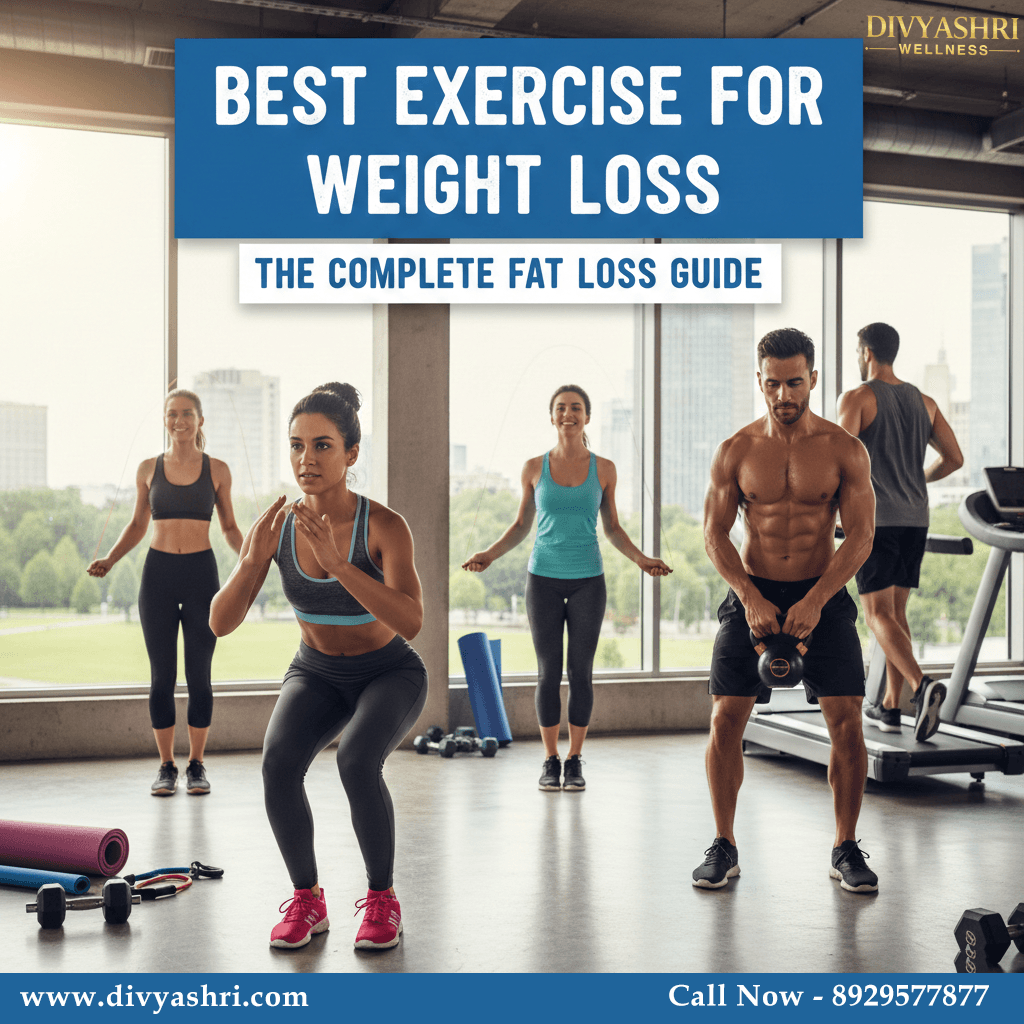
Weight loss is one of the most common health goals in the world today. With sedentary lifestyles, desk jobs, and easy access to high-calorie foods, gaining weight has become easy — but losing it requires smart planning.
This guide explains everything in detail — how fat loss works, what exercises burn the most fat, how to train at home or in a gym, beginner to advanced workout plans, and common mistakes to avoid.
How Weight Loss Actually Works
Weight loss happens when your body burns more calories than it consumes — this is called a calorie deficit.
Your body gets energy from food. When you eat more calories than you burn, your body stores the extra energy as fat. When you burn more calories than you eat, your body uses stored fat for energy.
Exercise helps weight loss by:
- Increasing calorie burn
- Boosting metabolism
- Preserving muscle mass
- Improving insulin sensitivity
- Reducing stress hormones
Types of Exercises for Weight Loss
There are three main categories of fat-burning workouts:
- Cardio training
- Strength training
- HIIT (High-Intensity Interval Training)
Each plays a different role in weight loss.
Cardio Training for Fat Loss
Cardio increases your heart rate and burns calories quickly.
Examples:
- Walking
- Jogging
- Cycling
- Swimming
- Skipping rope
- Stair climbing
Benefits:
- Burns calories during exercise
- Improves heart and lung health
- Reduces stress
- Easy for beginners
Drawback:
Only doing cardio may lead to muscle loss, which slows metabolism over time.
Strength Training for Fat Loss
Strength training builds muscle using resistance.
Examples:
- Squats
- Push-ups
- Lunges
- Deadlifts
- Dumbbell exercises
Benefits:
- Muscle burns more calories at rest
- Shapes the body
- Prevents loose skin
- Improves bone density
Many people avoid strength training because they fear “getting bulky,” but this is a myth — especially for women. Strength training actually makes the body lean and toned.
HIIT for Weight Loss
HIIT involves short bursts of intense exercise followed by rest.
Example:
30 seconds fast jumping jacks → 30 seconds rest → repeat
Benefits:
- Burns high calories in short time
- Boosts metabolism for hours after workout
- Improves endurance and insulin sensitivity
HIIT is perfect for busy people.
Best Exercises for Weight Loss (Detailed)
1. Walking
Best for beginners and overweight individuals.
- Burns fat slowly but steadily
- Improves digestion and circulation
- Reduces joint stress
2. Running
Burns high calories and strengthens legs and heart.
3. Jump Rope
Burns 10–15 calories per minute and improves coordination.
4. Squats
Engages the largest muscle group in the body, increasing metabolism.
5. Lunges
Improves balance, leg strength, and posture.
6. Push-Ups
Strengthens chest, shoulders, arms, and core.
7. Swimming
Full-body, low-impact, perfect for people with joint pain.
8. Cycling
Burns fat while being gentle on knees.
Exercises for Weight Loss at Home
You do not need a gym to lose weight.
Home Workout Circuit:
- Jumping jacks — 30 sec
- Squats — 15 reps
- Push-ups — 10 reps
- Mountain climbers — 30 sec
- Lunges — 10 reps each leg
- Plank — 30 sec
Repeat 3–4 rounds.
Weight Loss Workout Plan
Beginner (3 Days/Week)
- 20 min walking
- 15 min strength training
Intermediate (4 Days/Week)
- 20 min HIIT/cardio
- 20 min strength training
Advanced (5 Days/Week)
- 25 min HIIT/cardio
- 30 min strength training
Role of Diet in Weight Loss
Exercise alone is not enough.
Eat more:
- Protein (eggs, lentils, chicken, tofu)
- Fiber (vegetables, fruits, whole grains)
- Healthy fats (nuts, seeds, olive oil)
Avoid:
- Sugary drinks
- Fried foods
- Ultra-processed snacks
Common Mistakes
- Only doing cardio
- Starving yourself
- Skipping strength training
- Overtraining
- Not sleeping enough
Safety Tips
- Warm up before workouts
- Stretch after training
- Drink water
- Rest 1–2 days per week
- Increase intensity gradually
Final Conclusion
The best exercise for weight loss is a combination of cardio, strength training, and HIIT done consistently with a healthy diet and good sleep.
There is no shortcut—only sustainable habits.
Start slow, stay consistent, and trust the process—and your body will transform.