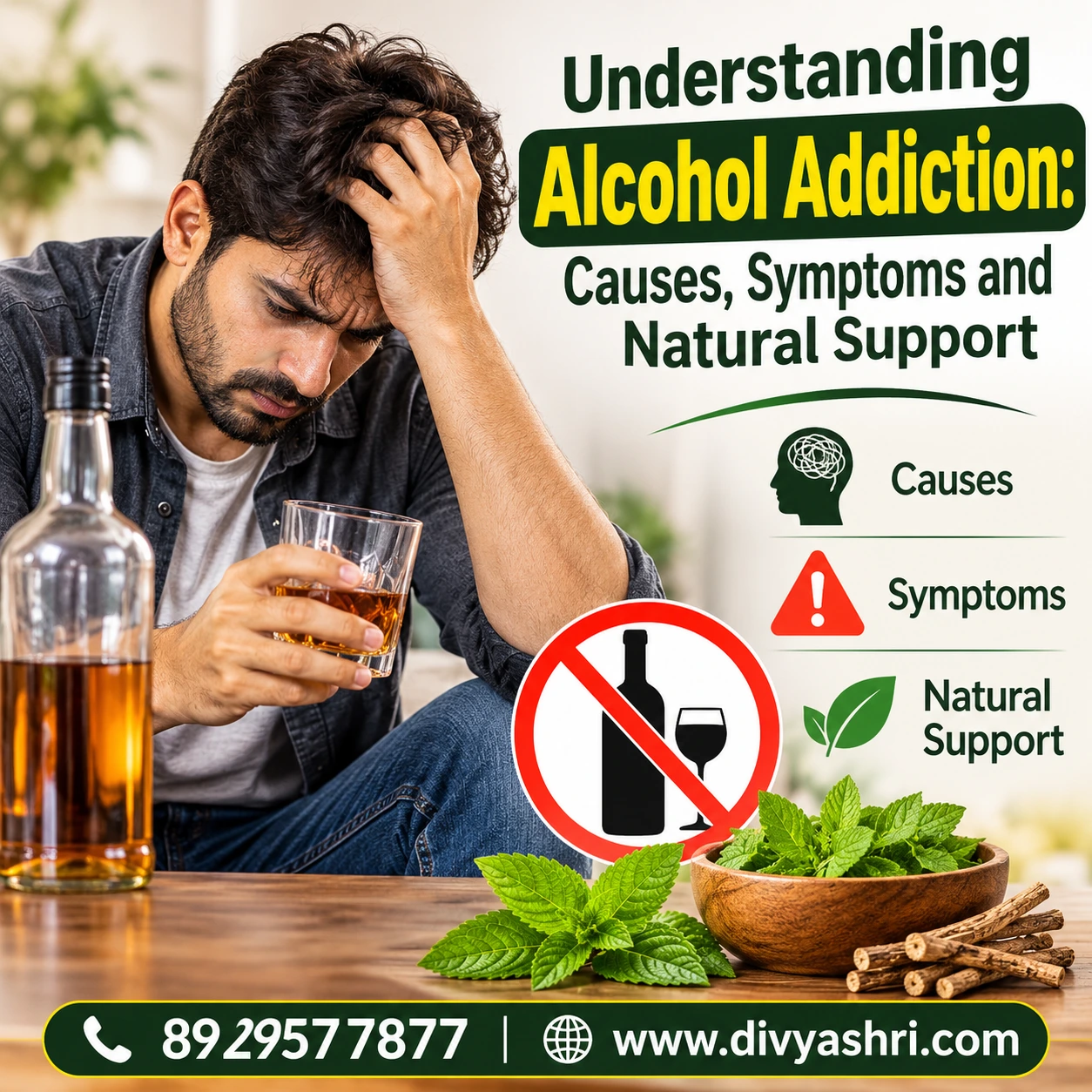
being, relationships, career and family life. What may begin as occasional drinking can gradually become a habit that is difficult to control. Many people continue drinking even when they understand its harmful effects.
If you or someone close to you is struggling with alcohol dependence, understanding the causes, early warning signs and available recovery options is an important first step.
But how does alcohol addiction develop? What are the common symptoms? Can lifestyle changes and natural support help during recovery?
What Is Alcohol Addiction?
Alcohol addiction, medically known as Alcohol Use Disorder (AUD), is a condition in which a person finds it difficult to control or stop drinking alcohol despite experiencing negative consequences.
It is more than an occasional drinking habit. Alcohol dependence can involve changes in brain function, cravings, tolerance, and withdrawal symptoms.
A person experiencing alcohol addiction may:
Drink more alcohol than originally intended.
Find it difficult to control their drinking.
Spend a significant amount of time drinking or recovering from its effects.
Continue drinking despite family, financial or health problems.
Experience strong cravings for alcohol.
Need increasing amounts of alcohol to experience the same effects.
According to the National Institute on Alcohol Abuse and Alcoholism (NIAAA), Alcohol Use Disorder can range from mild to severe. The condition is treatable, and professional support can help individuals work towards long-term recovery.
What Are the Main Causes of Alcohol Addiction?
There is no single reason why someone develops alcohol addiction. A combination of biological, psychological, social and environmental factors can increase the risk.
Here are some common causes of alcohol dependence.
1. Stress and Emotional Pressure
People sometimes use alcohol as a way to cope with stress, work pressure, financial problems or personal difficulties.
Although alcohol may temporarily change how someone feels, depending on it to manage emotions can gradually increase the risk of problematic drinking.
2. Genetic and Family History
Genetics can influence a person’s vulnerability to alcohol addiction. People with a family history of alcohol use disorder may have a higher risk, although family history does not mean addiction is inevitable.
3. Peer Pressure and Social Environment
Frequent exposure to drinking environments can influence alcohol consumption.
Social gatherings, workplace culture and peer pressure may encourage regular drinking, which can become difficult to control over time.
4. Mental Health Conditions
Anxiety, depression, trauma and other mental health concerns may contribute to unhealthy drinking patterns.
Some individuals use alcohol to temporarily escape uncomfortable emotions. However, alcohol can worsen mental health symptoms and make recovery more difficult.
5. Early Exposure to Alcohol
Starting alcohol consumption at a young age may increase the risk of developing alcohol-related problems later in life.
Early drinking can influence decision-making, habits and the likelihood of developing unhealthy patterns of alcohol consumption.
What Are the Common Symptoms of Alcohol Addiction?
Recognising alcohol addiction symptoms early can help individuals seek timely support.
The signs may be physical, emotional, behavioural, or social.
Physical Symptoms
Common physical signs associated with problematic alcohol use include:
Frequent headaches.
Poor sleep quality.
Nausea and vomiting.
Reduced appetite.
Unexplained fatigue.
Shaking hands, particularly when alcohol consumption is reduced.
Sweating and increased heart rate during withdrawal.
Long-term excessive alcohol consumption can also increase the risk of liver disease, digestive problems, cardiovascular conditions and certain cancers.
Psychological Symptoms
Alcohol dependence can affect emotional and mental well-being.
Possible symptoms include:
Anxiety and irritability.
Mood changes.
Difficulty concentrating.
Strong cravings for alcohol.
Feeling restless without alcohol.
Using alcohol to manage stress or emotional discomfort.
Behavioural and Social Symptoms
Changes in behaviour may be among the earliest warning signs.
These include:
Hiding alcohol consumption from family members.
Drinking alone or secretly.
Missing work or important responsibilities.
Neglecting family relationships.
Spending more money on alcohol.
Repeatedly trying to stop drinking but returning to the habit.
If several of these signs are present, a professional assessment can help determine whether the person has Alcohol Use Disorder.
How Does Alcohol Addiction Affect Your Health?
Excessive alcohol consumption can affect multiple organs and systems in the body.
1. Liver Health
The liver processes alcohol, and prolonged heavy drinking can contribute to fatty liver, alcoholic hepatitis, fibrosis and cirrhosis.
2. Brain and Nervous System
Alcohol affects brain function and can interfere with memory, coordination, judgement and decision-making.
Long-term heavy drinking can also contribute to neurological problems.
3. Heart Health
Heavy alcohol consumption can increase the risk of high blood pressure, irregular heart rhythms and other cardiovascular conditions.
4. Digestive System
Alcohol may irritate the digestive tract and increase the risk of stomach inflammation and pancreatitis.
5. Mental and Emotional Health
Alcohol misuse can contribute to anxiety, depression, sleep disturbances and difficulties in maintaining healthy relationships.
According to the World Health Organization (WHO), alcohol consumption is associated with more than 200 diseases, injuries and other health conditions.
What Happens When Someone Tries to Stop Drinking Alcohol?
When a person who has been drinking heavily or regularly becomes physically dependent on alcohol, suddenly stopping or significantly reducing alcohol intake can trigger alcohol withdrawal.
This happens because the brain and nervous system have adapted to the presence of alcohol.
Common Alcohol Withdrawal Symptoms
Anxiety and restlessness.
Sweating.
Shaking hands or tremors.
Nausea and vomiting.
Headaches.
Difficulty sleeping.
Increased heart rate.
Severe alcohol withdrawal can cause hallucinations, seizures and delirium tremens, which is a medical emergency.
Important Safety Warning: People who may be physically dependent on alcohol should not suddenly stop drinking without medical advice. Alcohol withdrawal can be life-threatening. A doctor can assess the risks and recommend medically supervised withdrawal when necessary.
If someone experiences seizures, severe confusion or hallucinations during withdrawal, seek emergency medical attention immediately.
How to Overcome Alcohol Addiction: Effective Treatment Options
Alcohol addiction is treatable, but recovery often requires a combination of medical care, psychological support and lifestyle changes.
1. Medical Assessment and Treatment
A healthcare professional can assess drinking patterns, withdrawal risks, physical health and mental health.
Depending on the person’s condition, treatment may include medically supervised detoxification and prescribed medication.
2. Counselling and Behavioural Therapy
Counselling helps individuals understand the reasons behind their drinking habits and develop healthier coping strategies.
Cognitive Behavioural Therapy (CBT) is one approach that can help people recognise triggers, change unhealthy patterns and manage cravings.
3. Support Groups
Recovery can become easier when individuals connect with people who understand similar challenges.
Alcoholics Anonymous (AA) and other peer-support programmes provide opportunities to share experiences and build accountability.
4. Family Support
Family members can play an important role in recovery by offering encouragement without blame or judgement.
A supportive environment can help individuals stay motivated and seek professional assistance.
Natural Support for Alcohol Addiction: Healthy Lifestyle Changes
Natural support for alcohol addiction should focus on improving overall health and supporting recovery alongside appropriate medical treatment.
No food, herb, drink or home remedy has been established as a cure for alcohol dependence.
Here are some healthy lifestyle practices that may support general well-being during recovery.
1. Follow a Balanced and Nutritious Diet
Long-term excessive alcohol consumption can affect appetite, nutrition and the body’s ability to absorb certain nutrients.
A balanced diet can help support general health.
Include:
Fresh seasonal fruits.
Green leafy vegetables.
Whole grains.
Lentils and pulses.
Milk, curd or other suitable protein sources.
Nuts and seeds.
People with long-term alcohol dependence may have nutritional deficiencies, including thiamine (Vitamin B1) deficiency. A healthcare professional can assess whether supplements are needed.
2. Maintain Proper Hydration
Alcohol can contribute to dehydration, particularly when consumption is excessive.
Drinking enough water throughout the day can support normal body functions.
Hydration is important, but water alone cannot reverse alcohol-related damage or treat withdrawal.
3. Develop a Regular Sleep Routine
Alcohol can interfere with normal sleep patterns.
During recovery, maintaining a consistent sleep schedule may support physical and emotional well-being.
Try to:
Sleep and wake up at consistent times.
Keep your bedroom comfortable.
Reduce screen exposure before bedtime.
Avoid relying on alcohol as a sleep aid.
4. Practice Yoga and Meditation
Yoga, meditation and breathing exercises can help some people manage everyday stress and improve emotional well-being.
Simple activities such as gentle stretching, meditation and mindful breathing may be included in a daily routine.
However, these practices are complementary support, not a replacement for addiction treatment.
5. Stay Physically Active
Regular physical activity can support cardiovascular health, improve mood and contribute to better sleep.
Walking, gentle yoga and other suitable activities can be introduced gradually.
People experiencing withdrawal symptoms or significant health problems should seek medical advice before starting an exercise routine.
6. Avoid Drinking Triggers
Identifying situations that encourage alcohol consumption is an important part of recovery.
Try to:
Avoid places where heavy drinking is common.
Identify emotional and social triggers.
Build new hobbies and routines.
Spend time with supportive friends and family.
Seek counselling when cravings become difficult to manage.
7. Seek Professional and Emotional Support
Natural lifestyle changes are useful, but they cannot replace professional care for alcohol dependence.
A doctor, addiction specialist or qualified counsellor can help create a personalised recovery plan.
Can Ayurvedic Support Help During Alcohol Addiction Recovery?
Many people explore Ayurveda and herbal wellness products when looking for additional support during lifestyle changes and addiction recovery.
Ayurveda traditionally emphasises a balanced routine, appropriate nutrition and individualised wellness practices.
However, it is important to understand that herbal products have not been established as a replacement for evidence-based alcohol addiction treatment or medically supervised detoxification.
Before using any Ayurvedic or herbal supplement, consider:
Checking the complete ingredient list.
Understanding the recommended use and precautions.
Discussing possible interactions with prescribed medicines.
Consulting a qualified healthcare professional, especially if liver disease or other medical conditions are present.
A natural product should never be used to manage dangerous alcohol withdrawal symptoms without medical care.
Divyashri Wellness and Nasha Mukti Plus
For individuals exploring herbal wellness products during their recovery journey, Divyashri Wellness offers Nasha Mukti Plus, a product presented in its addiction-support range.
People researching natural wellness options can explore its product information, ingredients, packaging and usage instructions before making an informed decision.
However, it is important to remember that Nasha Mukti Plus should not be considered a clinically proven treatment or cure for Alcohol Use Disorder unless supported by appropriate clinical evidence.
It must not replace:
Medical assessment.
Medically supervised alcohol withdrawal.
Prescribed addiction treatment.
Professional counselling.
Emergency medical care.
If you are considering a herbal product during alcohol recovery, consult a qualified healthcare professional first, particularly if you are taking medication or have liver-related health concerns.
Explore the product information here:
Nasha Mukti Plus – Divyashri Wellness
Making informed decisions and choosing safe, professional support are important steps towards a healthier lifestyle.
When Should You Seek Professional Help?
Do not wait until alcohol consumption causes serious health or family problems.
Consider professional help if:
You cannot control how much you drink.
You experience cravings regularly.
You have tried to stop drinking but cannot maintain it.
You experience shaking, sweating or anxiety when you stop drinking.
Alcohol is affecting your work or relationships.
You are concerned about your physical or mental health.
In India, the Government’s National De-addiction Helpline is available at 14446 for primary counselling and referral support.
If severe withdrawal symptoms occur, seek emergency medical care immediately.
Frequently Asked Questions About Alcohol Addiction
1. What are the early signs of alcohol addiction?
Early signs may include frequent drinking, strong cravings, difficulty controlling alcohol consumption, drinking despite negative consequences and needing more alcohol to experience the same effects.
2. What are the main causes of alcohol addiction?
Alcohol addiction can develop due to a combination of genetic, psychological, social and environmental factors. Stress, family history, mental health conditions and repeated alcohol consumption may contribute to the risk.
3. Can alcohol addiction be treated?
Yes. Alcohol Use Disorder is a treatable medical condition. Treatment may include medical care, counselling, behavioural therapies, prescribed medication and peer-support programmes.
4. Can someone stop drinking alcohol naturally at home?
It depends on the level of alcohol dependence. People who are physically dependent should not suddenly stop drinking without medical advice because withdrawal can cause serious complications.
5. What foods are helpful during alcohol recovery?
A balanced diet containing fruits, vegetables, whole grains, pulses and protein-rich foods can support general health. People with nutritional deficiencies may need individualised dietary advice and supplements.
6. Does yoga help with alcohol addiction?
Yoga and meditation may help manage stress and support emotional well-being. However, they should be used alongside professional addiction treatment rather than as a replacement.
7. Can Ayurvedic products cure alcohol addiction?
There is not enough reliable clinical evidence to establish herbal products as a cure for Alcohol Use Disorder. Anyone considering an Ayurvedic product should consult a healthcare professional and should not delay proven treatment.
8. Where can someone get help for alcohol addiction in India?
People can approach a doctor, psychiatrist, addiction specialist or government-supported de-addiction centre. India’s National De-addiction Helpline is 14446.
Conclusion
Understanding alcohol addiction is an important step towards recognising unhealthy drinking patterns and seeking timely support. Alcohol dependence can affect physical health, emotional well-being, family relationships and everyday life, but recovery is possible with the right treatment and support.
Medical assessment, counselling, a balanced diet, regular physical activity, healthy sleep and a supportive environment can all contribute to a healthier recovery journey.
Natural wellness practices may complement professional care, but they cannot replace medical treatment, particularly during alcohol withdrawal.
If you or someone close to you is struggling with alcohol dependence, take the first step by speaking with a qualified healthcare professional. With informed decisions, consistent support and appropriate treatment, a healthier alcohol-free life is possible.
Divyashri Wellness – Supporting informed wellness choices for a healthier lifestyle.
For more information, visit: https://www.divyashri.com/